
By Dr. Shukan Patel, DDS
November 9, 2026
Tooth sensitivity can come from exposed dentin, worn enamel, receding gums, decay, or a damaged tooth. It can often be treated, but the right treatment depends on identifying the cause. Options range from desensitizing products to treatment of the affected tooth.
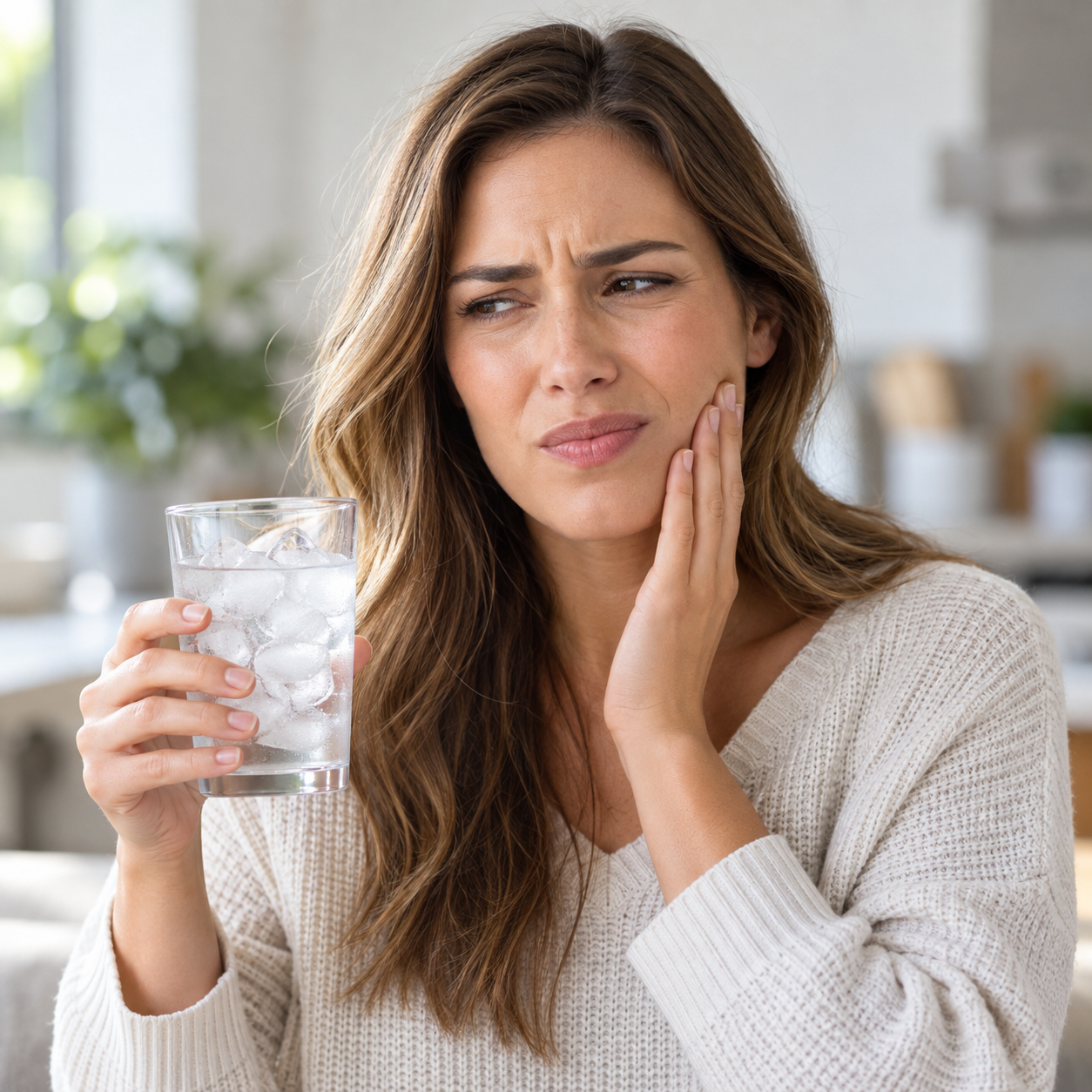
When someone tells me, “I just have sensitive teeth,” I want to understand what sits behind that word “just.” Some patients assume they have a cavity. Others have decided that avoiding ice cream or cold water is simply part of life.
At Colorado Family Dentistry, my starting point is different: sensitivity is a clue, not a diagnosis. Before choosing a treatment, I want to know what triggers it and whether you can point to one tooth or whether several teeth bother you.
That distinction helps guide the conversation. My goal is not only to make your teeth more comfortable, but also to understand why they became sensitive in the first place.
One sensitive tooth gives me a place to focus my examination. More widespread sensitivity prompts a broader conversation about habits and exposures. Neither pattern establishes the cause by itself.
I start by asking whether cold, heat, or sweets trigger the sensation. If you can point to a particular tooth, I examine that area and may take dental images to investigate it. If the sensitivity is more generalized, I also ask about grinding, clenching, brushing, and diet.
The American Dental Association lists several possible causes, including decay, fractured teeth, worn fillings, worn enamel, and exposed roots. That is why I do not assume that every sensitive tooth has a cavity—or that sensitivity without an obvious cavity needs no attention.
Sensitivity can develop when dentin, the layer beneath a tooth’s protective outer covering, becomes exposed. Dentin contains microscopic channels that can transmit sensations toward the inside of the tooth.
There is an important distinction here: enamel covers the crown, while a different tissue called cementum covers the root. Receding gums can expose root surfaces; that is not the same thing as enamel wearing off the top of a tooth. The ADA’s explanation of sensitive teeth describes both pathways.
In my examinations, I pay attention to wear on the chewing surfaces and near the gumline. I also use photographs of patients’ own teeth to explain what I see. It is much easier to understand a recommendation when you can see the area we are discussing.
Sensitive toothpaste can help, but whether it is enough depends on the cause. I prefer a conservative approach when the examination supports it—not a toothpaste trial in place of investigating a tooth that needs treatment.
Fluoride is part of my preventive-care conversations, and I may recommend an over-the-counter sensitivity toothpaste or a prescription product. For an appropriate case, I ask the patient to use the recommended product consistently and notice whether things improve over the next couple of weeks. That is my follow-up approach, not a promise that everyone will improve on the same schedule.
Desensitizing toothpaste usually requires repeated applications. If it is not helping, I want the patient to return so we can reassess the location, triggers, and likely cause rather than keep switching products indefinitely.
Sometimes the answer is not another toothpaste. Depending on the diagnosis, treatment may involve repairing decay or damaged tooth structure. A crown or root canal is not an automatic next step for sensitivity; those decisions require an assessment of the tooth and the tissues inside it. The American Association of Endodontists explains how different pain patterns can point toward different problems.
Yes. Grinding or clenching, also called bruxism, can occur during sleep without your awareness. It can contribute to tooth wear and sensitivity.
I remember a patient who had already tried fluoride and desensitizing treatments but did not realize she was grinding at night. I showed her photographs of the wear on her chewing surfaces and the areas of tooth structure lost near her gumline.
She began wearing a night guard while continuing sensitivity toothpaste and professional fluoride treatments. Her sensitivity improved substantially with that combination.
That is one patient’s experience, not proof that a night guard alone will solve everyone’s sensitivity. Gumline wear alone does not establish that grinding caused it, either. The examination and history need to fit together.
A guard is used to protect teeth from grinding-related damage; it does not necessarily stop the grinding itself. The National Institute of Dental and Craniofacial Research describes guards as one part of bruxism care. What mattered in this case was looking beyond symptom relief to a possible ongoing source of wear.
I focus on the habits that actually come up in our conversation rather than handing every patient a long list of restrictions.
Arrange a dental evaluation for new, recurring, or persistent sensitivity. You do not need to decide on your own whether it is a cavity, wear, or something else before making an appointment.
Pain that lingers after hot or cold, pain when biting, or severe ongoing pain warrants prompt assessment. These patterns can suggest a problem beyond straightforward exposed-dentin sensitivity, but they do not diagnose the problem by themselves.
Seek urgent dental care for swelling or fever with tooth pain. If swelling makes breathing or swallowing difficult, seek emergency medical care immediately. These are warning signs of a potentially serious dental infection, not symptoms to manage with sensitivity toothpaste.
For my patients, the practical message is simple: describe what you feel, what brings it on, and where it happens. Those details help us move from “my teeth are sensitive” to a treatment plan that makes sense.
If sensitive teeth are changing how you eat, drink, or brush, schedule an evaluation at Colorado Family Dentistry in Lakewood, CO. We can discuss what you are feeling, examine the areas involved, and work out which next step fits your situation. To arrange a visit, contact 303-284-0202.